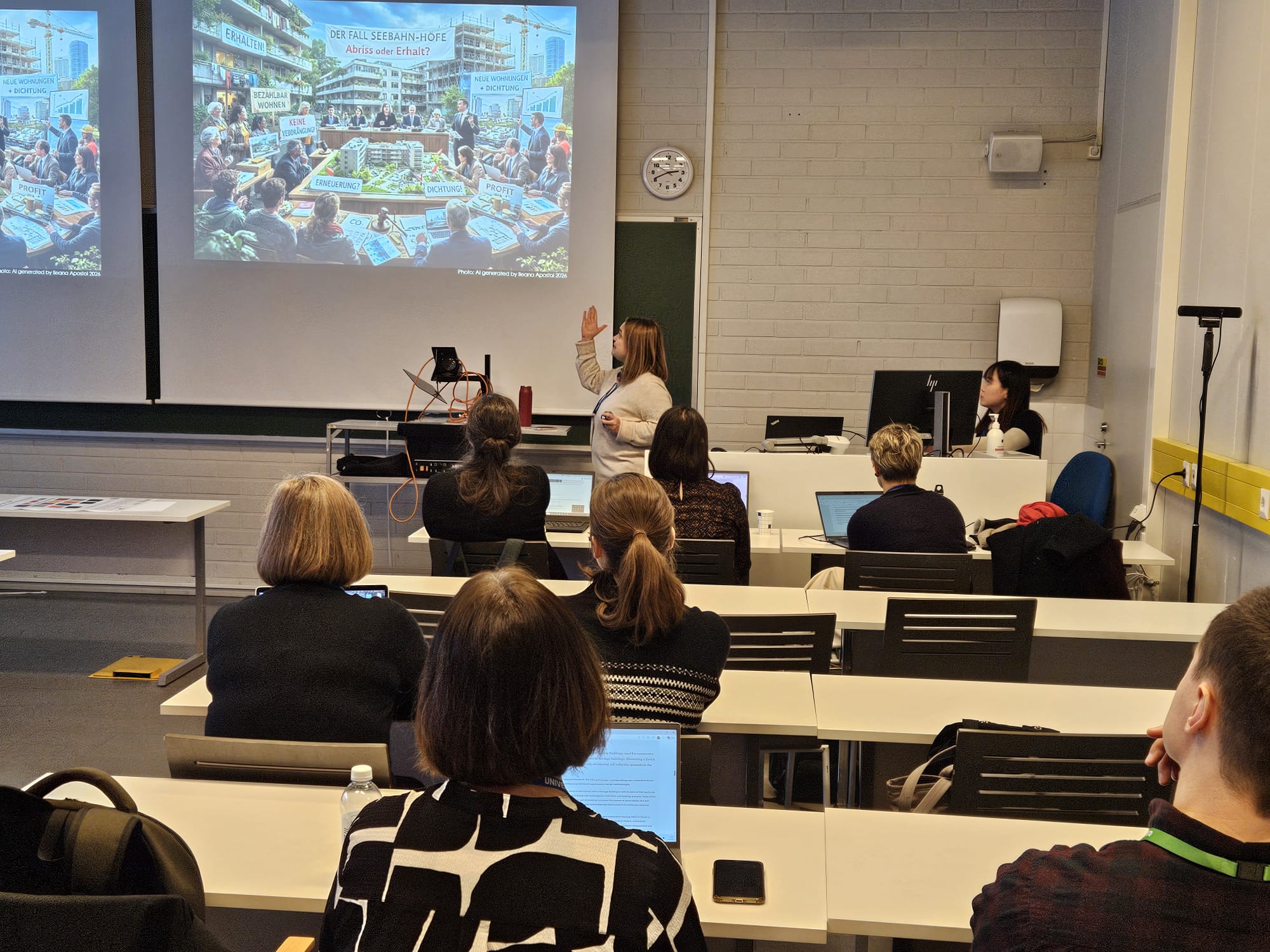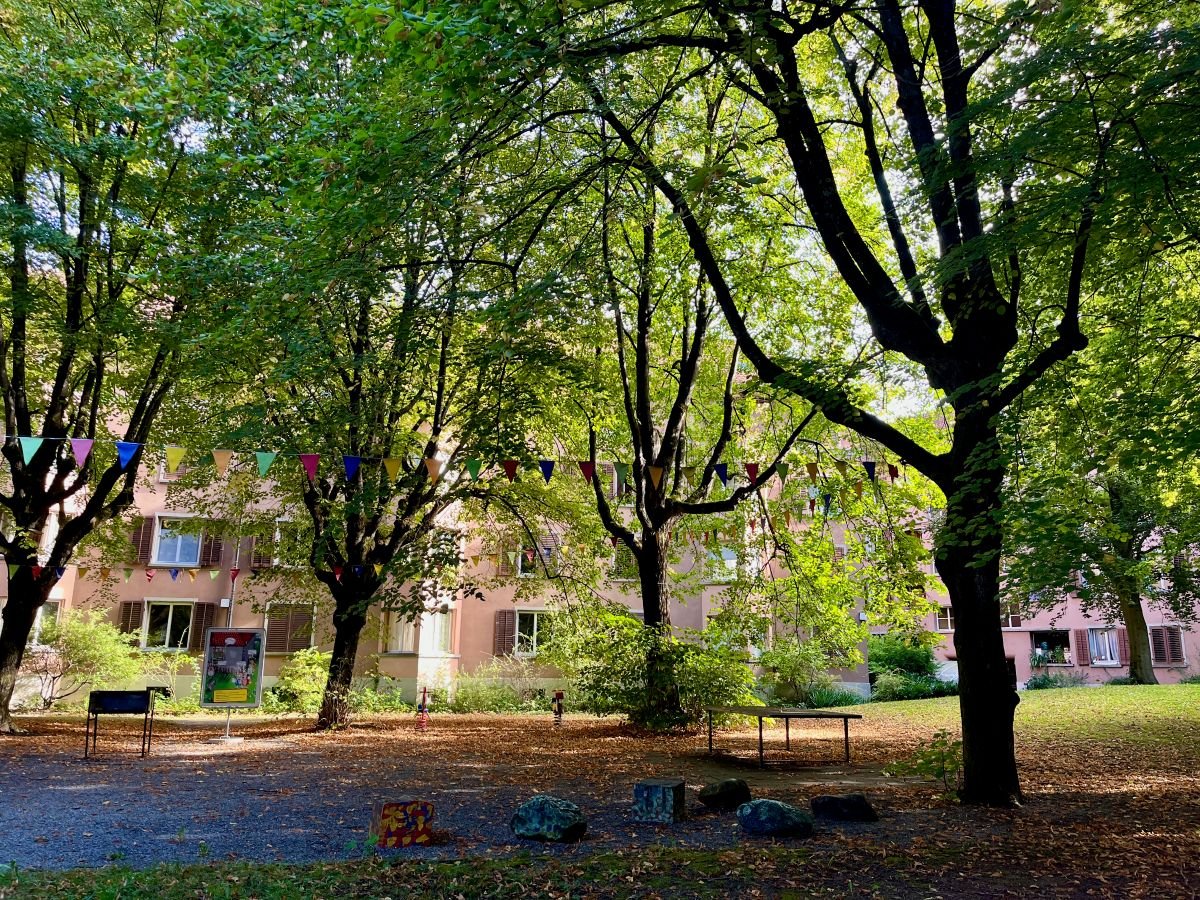
In the series of experiments using the Talking Buildings method, a particular heritage case is the Seebahn-Höfe in Zurich, Switzerland. The largest cooperative housing (ABZ) and the first one (BEP) in Zurich are facing a crucial challenge generated by demanding urban development: to demolish one of their historic settlements, the Seebahn-Höfe, and replace it with modern and more efficient buildings, a process involving residents’ displacement and the dismantling of a long-term formed community.
We approached the case with a new research question in citizen science: to what extent does the impersonation of nonhuman elements enhance the quality of participatory processes? As the Zurich housing cooperatives show a peculiar situation, in which heritage are both the settlements and the cooperative movement itself, we also asked: what is the meaning of heritage and to whom belongs the decision about its value, as the cooperatives are members’ associations including the settlement’s current residents?
These questions intersected in the process of decision-making about their future, with the call of the IG Seebahnhöfe, a group of Zurich inhabitants asking for a major shift in thinking with regard to climate concerns, construction waste, and the city’s housing history (IG Seebahnhöfe-retten /-rescue). They speak out as a group in the public discourse also because some members fear professional and personal reprisals, and therefore, the anonymity offered by the buildings’ voice provides a means of conveying sensitive issues. After presenting them the Talking Buildings method through a few examples of impersonation in situ, a few group members took on this challenge and created a campaigning video, in which one of the speakers is the building itself.
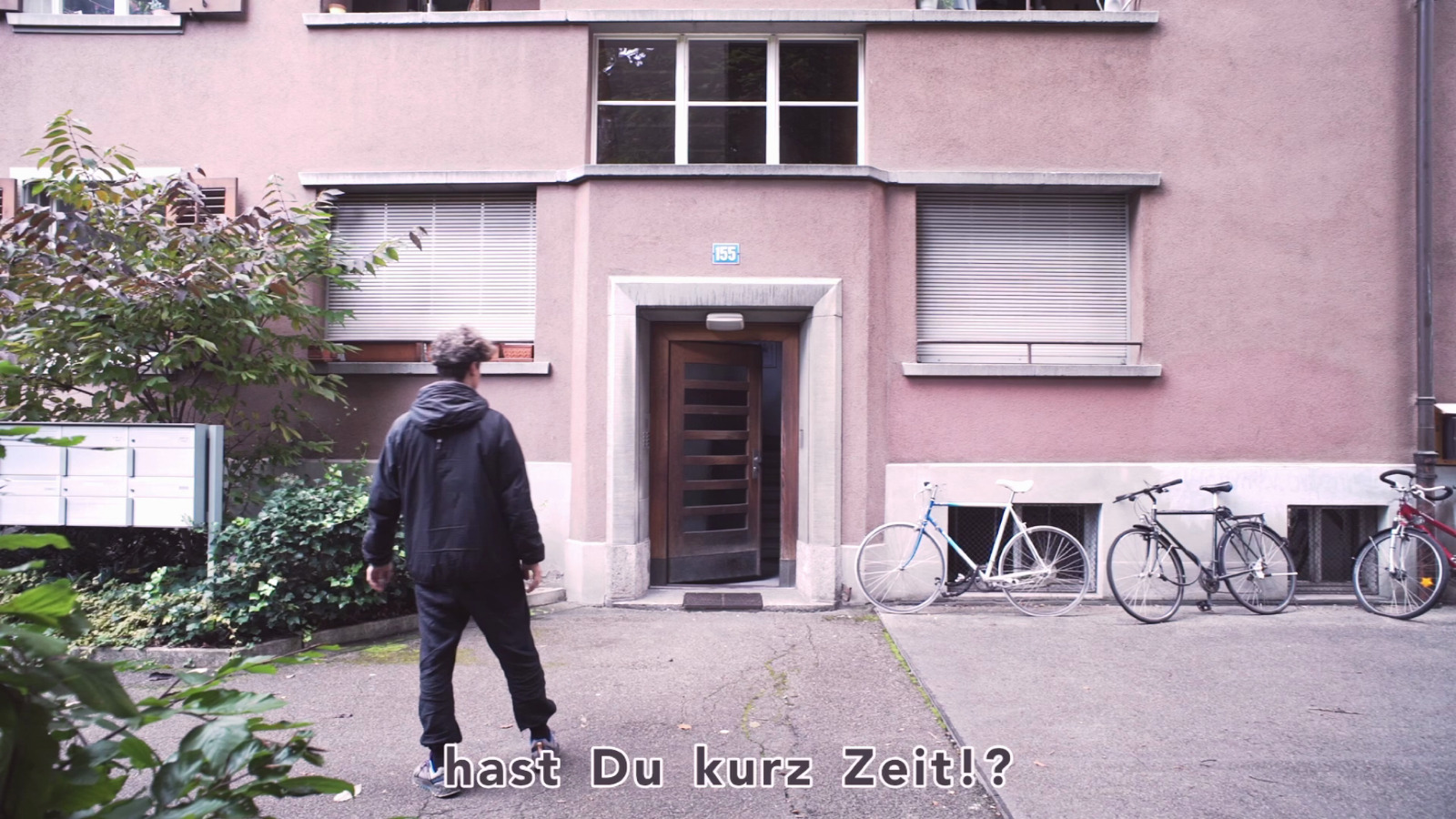
It is a simple but good example of engaging with local groups, and of promoting in the dialogue with residents and campaigners the Talking Buildings method as an enabler, through suggestive information, of collective awareness about delicate heritage concerns and core tensions in negotiating heritage value. It is a performative form that focuses on the experiences of users and visitors, and allows participants to be more than contributors of data and personal impressions, through self-reflection, by being aware of and reflecting upon one's implicit knowledge base or knowing-in-action.
Moreover, by means of impersonation, the 100 years old buildings are granted participation in their survival trial, alongside with the voices calling either for preservation or for demolition, replacement and urban densification. The Seebahn-Höfe case illustrates the ambivalence of heritage and the complexity of such decision-making processes, where the choice is between two strong options covering a large spectrum of emotional meanings. We touched on this dilemma during a conference panel at the ECSA 2026 in Oulu, Finland.