

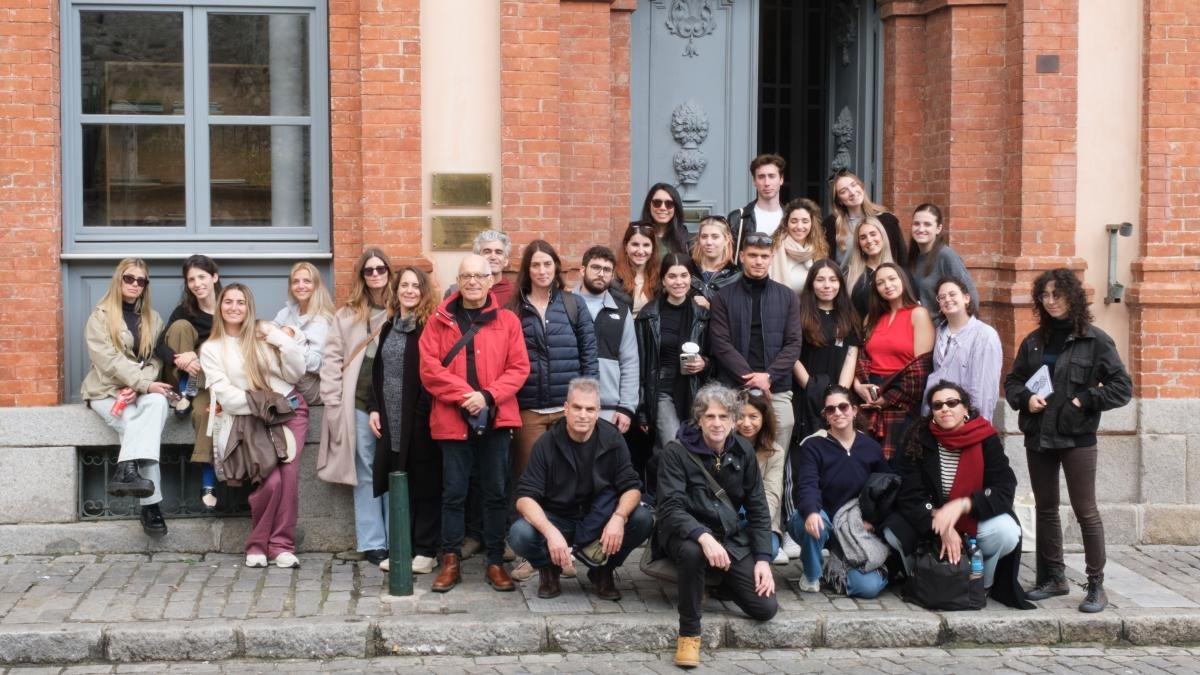
In the spring of 2025, during an international student workshop held in Xanthi, Greece, by the title “The spirit of material, building sustainability,”, organized by ECOAMA/ECOWEEK, TalkingBuildings was introduced as a complementary methodology for analyzing the needs and potential of buildings.
In this specific context it was used as a way to present oneself through a selected buildings, and showcase students’ work on how materials and building elements can become the source of inspiration for new design and new structures.
The success of this experience motivated us to make the #Talkingbuildings methodology an inherent part of this series of workshop, which after Xanthi took place in [Graz](), [Nocosia (online)](), and recently in [Bucharest](). The feedback was very positive and we are encouraging you to try it also in similar student workshops.
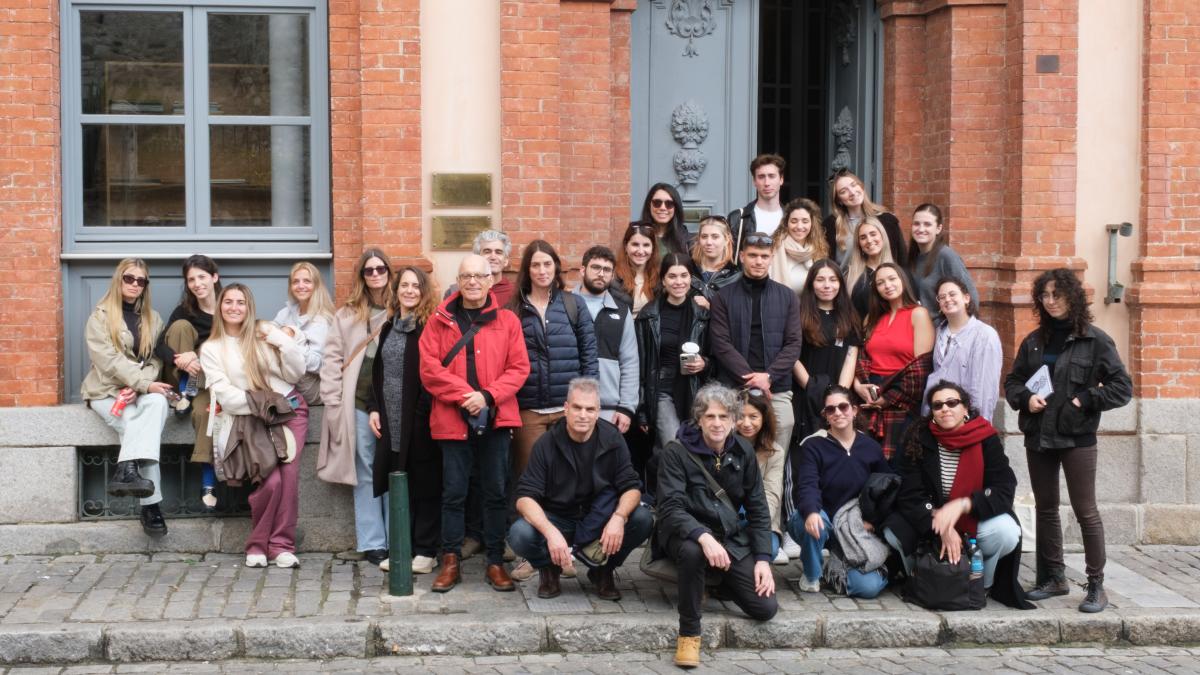
The main assumption behind the #TalkingBuildings methodology is that giving a voice to buildings can reveal important aspects of their condition and potential future. So, the students are invited to respond to the #TalkingBuildings challenge: to 1) Observe carefully a building through all their senses, 2) Frame a specific part of this building, and 3) Narrate a story through its own perspective. The students’ outcomes in the form of video recordings fulfilled these expectations -- you can watch the introduction to the #Talkingbuildings concept including discussion on the students' assignments -- and they inspired further methodological development.
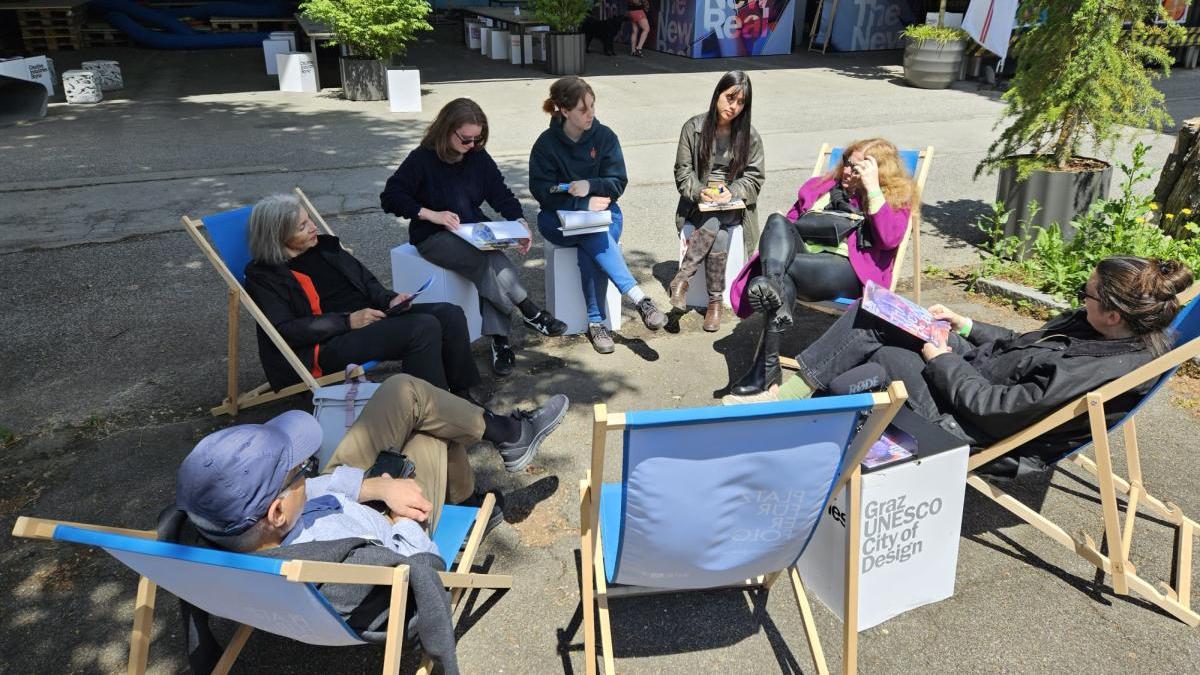
In the context of the Design Month Graz 2025, students were invited by to deeply observe the Hornig Areal with all their senses, through smell collection, deep listening, and stamping, among other playful techniques for stimulating the less "common" senses when observing buildings. The #TalkingBuildings was then used as a way to express the finding in an equally playful and inspiring way.
In the follow-up workshop with the same topic hosted by the Frederick University in Nicosia, Cyprus, the #TalkingBuildings challenge was introduced with three additional suggestions: 1) Choose a core tension in the process of heritage renovation; 2) Use the dialogue form; 3) Identify and clearly distinguish between the generic and the specific of your particular case study.
The workshop students were inspired by this extended challenge and imagined dialogues either between buildings or parts of the buildings, or between various temporalities of a heritage structure, which were recorded as videos to become the basis of their heritage interventions.
In addition to drawing attention to critical issues by means of humor, and diversifying the observer’s perception by offering central stage to some overlooked details, turning around the point of view and alternating temporalities, the #TalkingBuildings impersonation proved to stimulate participation due to its playfulness, and by merging anonymity with collective perception.
Furthermore, the purpose of this dialogical frame is to go beyond descriptive impersonations to more analytical materials incorporating some of the tensions of cultural heritage renovation. This citizen science exercise’s ambitions are to shift from augmenting collective awareness to producing experts’ knowledge and building some understanding of the challenges inherent within the complex decision making process related to heritage renovation.
In this iterative process leading to development of citizen science methodology, a third international student workshop took place in July 2026, in the context of the ECOWEEK 2026 in Bucharest and Eforie Sud, Romania, whose impressions one can see here, and more detailed documentation will be published in this web site.
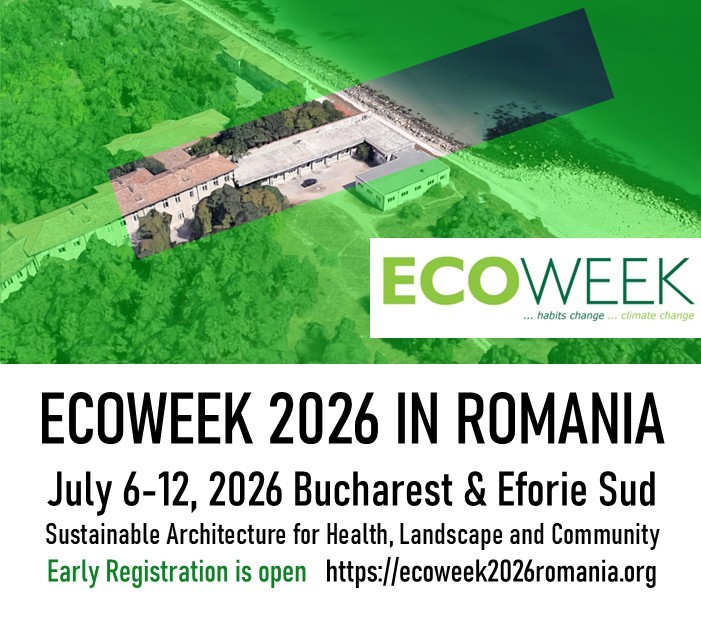
Since the most important need of the local team was to communicate the potential of the site at Eforie Sud, the #TalkingBuildings was considered as a communication tool to present the high-level potential of the place.
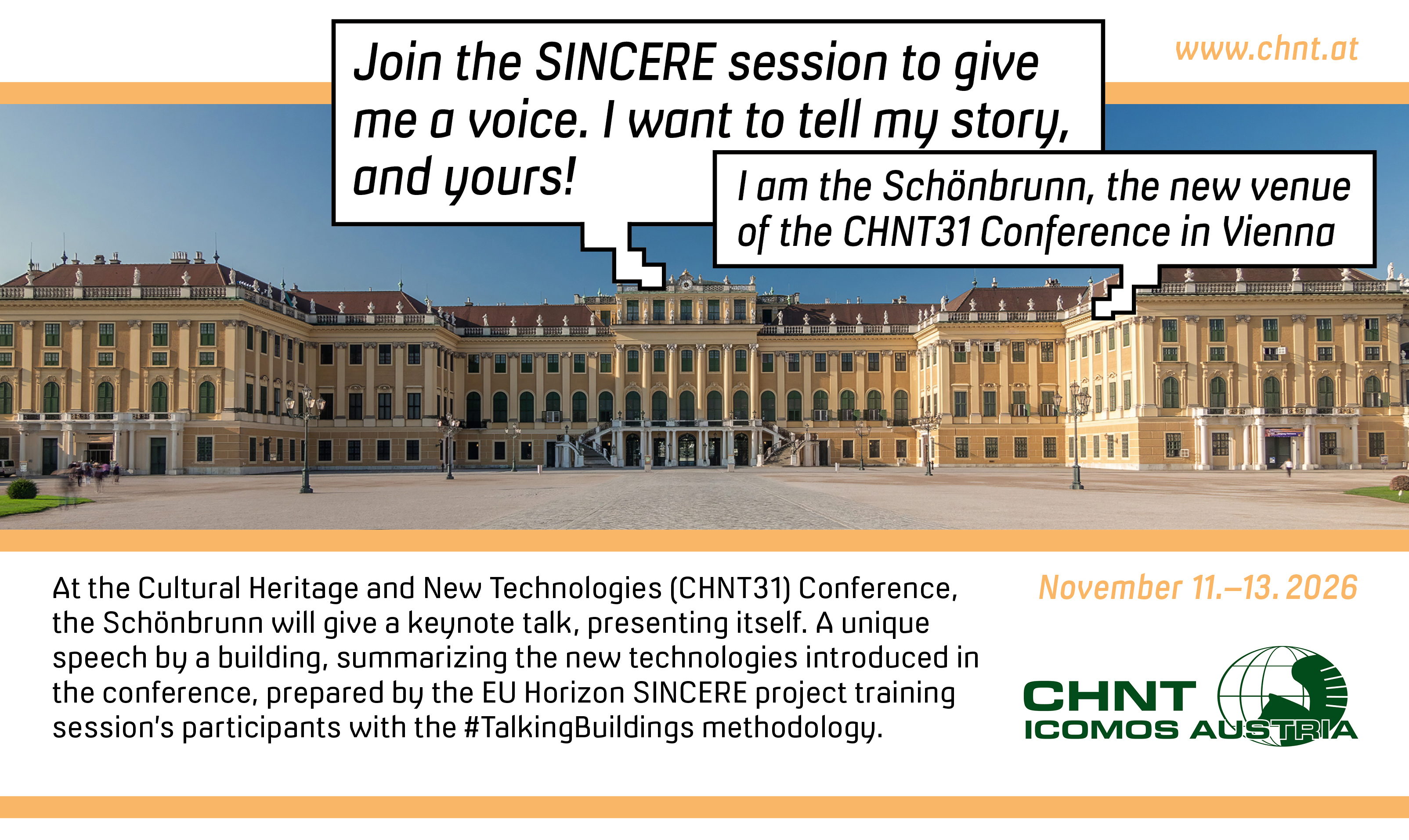
A few months later, in the context of the CHNT31 conference in Vienna, 11-13 November 2026, we add one more layer in the development of the TalkingBuildings game by bringing together technology developers with researchers in a unique performance titled "Listen to the fountain / the voice of the Schönbrunn. The conference’s venue, the iconic Schönbrunn palace, will give a keynote speech at the end of the conference using the different tools and methodologies applied on itself through the collaboration of interdisciplinary teams.
Stay tuned for more documentation on these experiments and let us know if you are interested to use the #TalkingBuildings methodology for a student or conference workshop at contact@talkingbuildings.net.